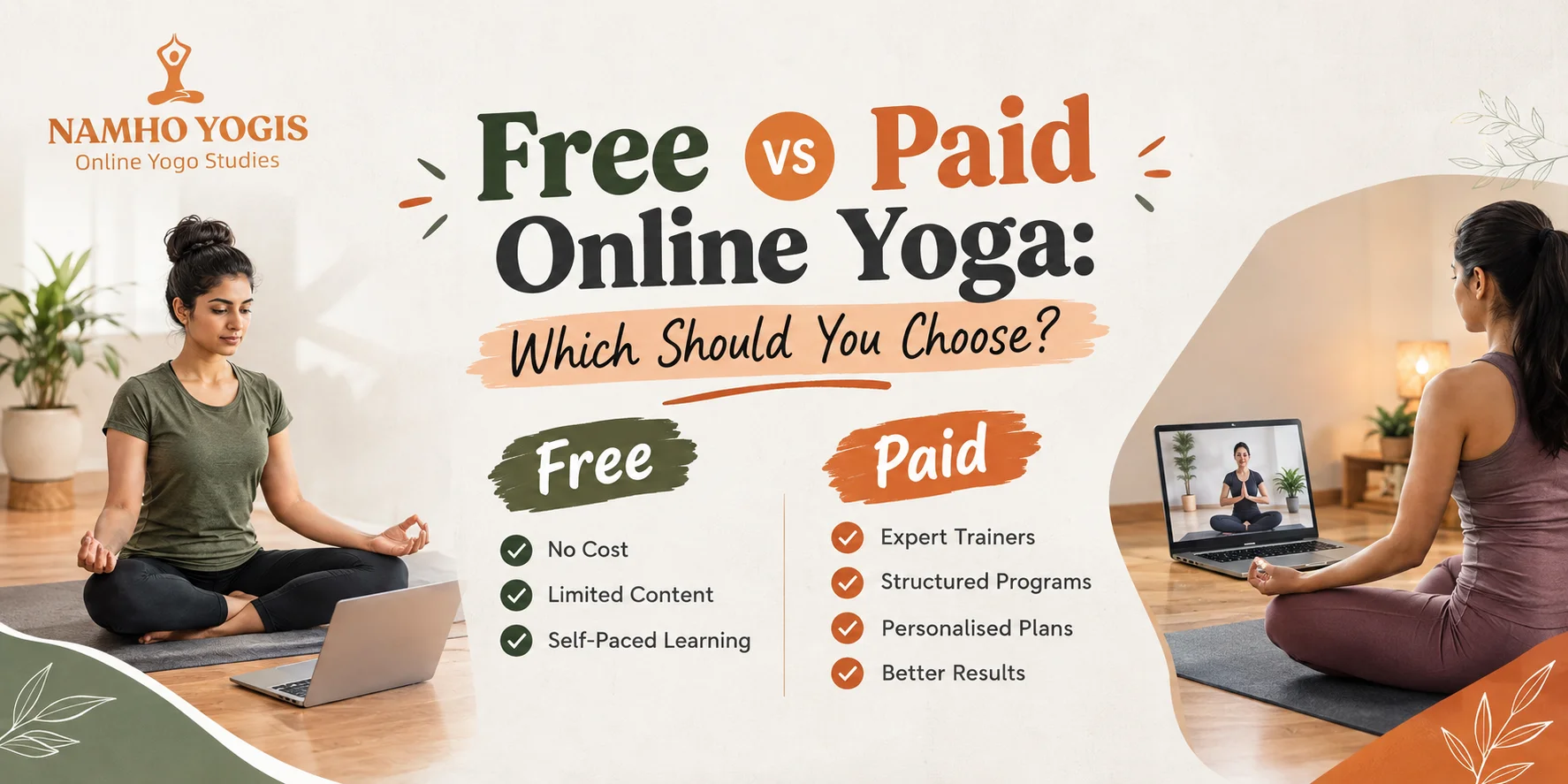
If you've searched for online yoga, you've probably noticed two very different worlds. On one side, thousands of free videos you can start right now. On the other, memberships, class packs and subscriptions asking for a monthly fee. It's reasonable to wonder whether the paid option is actually worth it, or whether you're just paying for something YouTube already gives away.
The honest answer is that neither is better for everyone. It depends on what you need from a class. Here's how to work out which suits you.
What Free Online Yoga Does Well
Free yoga is a genuinely good place to start, and there's no reason to feel you have to pay on day one.
- No risk. If you try it and it isn't for you, you've lost nothing.
- Huge variety. You can sample different styles, lengths and teachers until something clicks.
- Total flexibility. Practise at 6 AM or 11 PM, for ten minutes or an hour.
- A decent way to learn the basics. If you just want to try a few simple poses, free videos can do that.
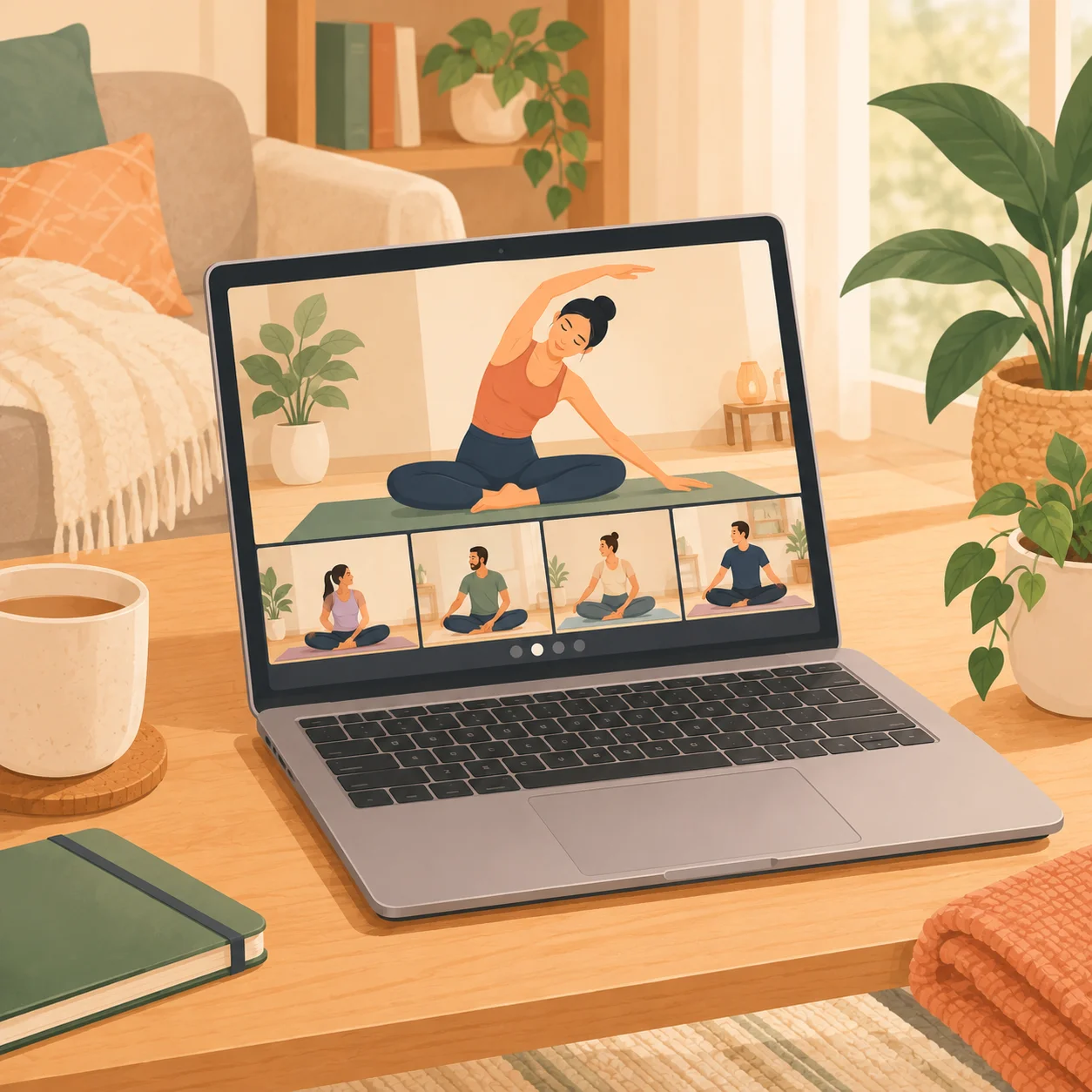
Where Free Starts to Fall Short
The limits tend to show up after a few weeks.
- Nobody checks your form. A video can't see that your knee is collapsing inward or your lower back is overarching. Small mistakes get repeated until they become habits.
- No structure. Choosing something new every day takes effort, and plenty of people drift away because there's no plan to follow.
- No accountability. A video won't notice if you skip a week.
- Hard to tell what's good. Quality varies enormously, and it isn't always obvious which teachers are properly trained.
What You're Actually Paying For With Paid Classes
Good paid yoga isn't paying for poses. You can get poses anywhere. You're paying for four things:
- Feedback. In a live class, an instructor can see you and correct you.
- Structure. A schedule and a progression, so you aren't improvising.
- Accountability. A class booked for Tuesday at 7 PM is much harder to skip than a video you can watch "later".
- Safety. If you have a stiff back, tight hips or you're returning after a long break, careful guidance matters more.
That doesn't mean every paid class delivers those things. A pre-recorded library behind a paywall may offer more polish than free videos, but little of the feedback.

How Online Yoga Subscriptions Typically Work
Pricing models vary, so it helps to know the common ones:
- Monthly membership. A fixed fee for a set number of classes, or unlimited access to a library. Usually renews automatically.
- Pay per class (drop-in). You pay each time you attend. Flexible, but costs more per session.
- Class packs. A bundle of classes bought upfront, often with an expiry date.
- Annual plans. A lower monthly cost in exchange for committing for a year.
- One-to-one coaching. A private instructor built around your goals. Costs more but gives the most attention.
None of these is automatically the best. The right one depends on how often you'll actually show up.
The Commitment Question: How Often Will You Really Practise?
This is the part most comparisons skip. A paid plan only makes sense if you use it.
Here's a simple way to think about it. Say a plan costs £40 a month. If you attend eight classes, that's £5 a class. If you attend two, it's £20 a class, and a free video would probably have served you better. These figures are just an illustration, but the maths works for any price.
For most beginners, two to three classes a week is a realistic and useful rhythm. If you know you'll manage that, a membership usually pays off. If your schedule is unpredictable, pay-per-class or a pack may suit you better than a subscription that quietly charges you every month.
Before You Pay for Anything, Check These
- Is there a free trial? A good provider lets you try before committing.
- How do cancellations work? Look for the notice period, and whether the plan renews automatically.
- What times do classes run? For UK students, convert every time to GMT (or BST in summer). A great class at 3 AM isn't much use.
- How big are the groups? Smaller groups mean more individual attention.
- Who's teaching? Look for recognised certification, such as Yoga Alliance.
- What's the currency? Some providers price in dollars, so check what your card will actually be charged.
For more on what to look for, see our guide to online yoga classes in the UK.
A Sensible Middle Route
You don't have to choose one forever. Plenty of people use free videos to explore and build confidence, then move to a paid class once they want feedback, structure or help with a particular issue like a stiff back. If you're brand new, it's worth reading our guide to Hatha yoga for beginners first, since a slow, steady style makes the jump from free to live much easier.
Where Namho Yogis Fits
Namho Yogis offers live online classes taught by Yoga Alliance-certified instructors trained in Rishikesh, India, in small groups, private sessions and two-person sessions. There's a free trial, so you can see the live format before paying anything, and you can cancel anytime with no hidden fees.
Two honest notes for UK readers. Prices are listed in US dollars, so what you pay in pounds will depend on your card's exchange rate. And classes are currently scheduled across US time zones, so some slots land at a comfortable time in the UK while others fall overnight. Have a look at the timings page and convert to GMT before you book.

One Last Thing
If you have an injury, a long-standing condition, or you're not sure whether yoga is suitable for you, speak to your GP before starting any new exercise, whether it's free or paid.